Saudi Arabia's Food Imports Top $33 Billion as the Kingdom's Food Market Keeps Growing
Saudi Arabia's appetite for imported food is growing, not shrinking. New trade and market data released over the summer confirm that the Kingdom remains one of the world's most import-dependent — and fastest-expanding — food markets, with buyers actively looking for new international suppliers ahead of the 2026/27 season.
Imports pass $33 billion
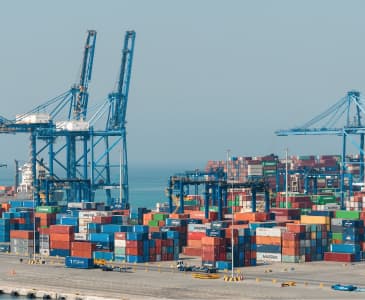
The Kingdom imported more than $33 billion worth of food and agricultural products in 2025, of which roughly $17.4 billion was consumer-oriented food — the packaged, branded and ready-to-sell products that fill supermarket shelves and restaurant kitchens. According to the U.S. Department of Agriculture's 2026 Retail Foods report, Saudi Arabia still relies on imports for around 80 percent of its food requirements, a structural gap that domestic production is not expected to close in the foreseeable future.
The direction of travel is upward. U.S. customs data for the first half of 2026 show consumer-ready food exports to Saudi Arabia up 22 percent on the same period a year earlier, and the Kingdom draws supply from a wide range of competing origins including Brazil, Egypt, the EU, India, Turkey and the UAE.
A $57 billion retail market, growing every year
Saudi food retail sales reached approximately $57 billion in 2025 and are forecast to grow by around 4 percent in 2026, driven by population growth, a rising share of younger consumers, more than 14 million expatriate residents and record religious tourism — over 18 million Umrah visitors in 2025 alone. Modern retail continues to consolidate and expand, with the largest chains now accounting for well over half of the organised trade.
Foodservice: the fastest-growing channel
Beyond retail, the Kingdom's foodservice market — restaurants, cafés, hotels and catering — is currently valued at around $30 billion and is projected to reach roughly $45 billion by 2030, a compound annual growth rate above 8 percent. Cafés are the fastest-growing segment, lifted by the spread of coffee culture and the opening of new entertainment and leisure destinations across the country.
Government backing
Saudi Arabia's Ministry of Industry and Mineral Resources is targeting $20 billion in new investment in the food industry by 2035, with poultry, dairy, bakery, confectionery and beverages identified as priority sectors, and an ambition to triple agricultural exports to $10.9 billion. Flagship projects already under way include Almarai's $1.2 billion poultry expansion — a signal of how seriously the Kingdom is building its food economy under Vision 2030.
What it means for exhibitors
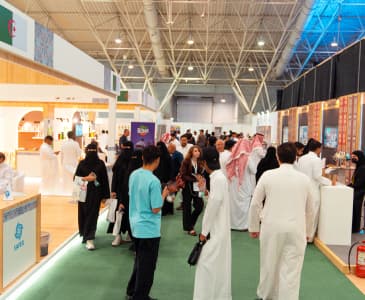
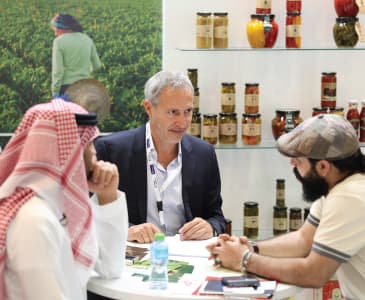
The numbers point to one conclusion: the Saudi market needs international suppliers, and its buyers are sourcing now. Importers, distributors, retailers and HORECA operators from across the Kingdom will gather at Foodex Saudi 2026 — 14th Edition, 23–25 November at the Jeddah Center for Exhibitions & Events, to meet the companies that can supply them.
Sources: USDA Foreign Agricultural Service, Retail Foods Annual – Saudi Arabia (August 2026); Saudi Ministry of Industry and Mineral Resources via Saudi Press Agency; Federation of Saudi Chambers (National Franchise Committee); Technavio Food Retail Market Analysis 2026–2030.
Curated by the Foodex Saudi team from market coverage of the Saudi and GCC food & beverage sector.