Jeddah Market Update: Why the Gateway to Makkah and Madinah Is the Kingdom's Most Important Food Market
The Kingdom's import gateway
Saudi Arabia imported more than $33 billion of food and agricultural products in 2025, of which $17.4 billion was consumer-ready food — the packaged, chilled and fresh products that go straight to supermarket shelves and restaurant kitchens. Most of that volume arrives by sea, and most of it arrives in Jeddah.
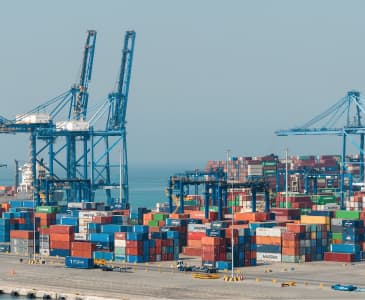
Jeddah Islamic Port is the Kingdom's primary commercial gateway, handling roughly 65% of Saudi Arabia's seaborne imports. It sits on one of the world's busiest east–west shipping corridors, linking Europe, Asia and Africa, which is why the port is the first point of entry for food brands from every major exporting region.
That role is being reinforced. In July 2026 the Saudi Ports Authority (Mawani) announced more than SAR 641 million ($171 million) of additional investment at the port over a three-month period, including:
- three new ship-to-shore cranes, 17 rubber-tyred gantry cranes and 91 terminal trucks;
- 200,000 m² of additional container terminal capacity;
- refrigerated cargo capacity doubled to 9,000 reefer plugs, in direct response to growth in food, pharmaceutical and other temperature-sensitive cargo.
The upgrade is expected to improve berth productivity, shorten vessel turnaround times and allow larger container vessels to call at Jeddah. Earlier in 2026, APM Terminals acquired a 37.5% stake in the port's South Container Terminal and Maersk introduced a new Middle East–India–Levant service calling at Jeddah — a clear signal of confidence from the world's largest shipping lines.
For food exporters, the message is simple: the chilled and frozen supply chain into Saudi Arabia runs through Jeddah, and it is getting bigger.
Gateway to Makkah and Madinah
Jeddah is also the trade hub for the Two Holy Cities. Makkah is around an hour away by road and 30 minutes by the Haramain high-speed railway; Madinah is roughly two hours away. The importers, wholesalers, hotel groups and catering companies that serve Hajj and Umrah visitors are based in and buy through Jeddah.
The scale of that demand is growing. Saudi Vision 2030 targets 30 million Umrah pilgrims a year, up from a record of more than 18 million in recent seasons, alongside the Kingdom's wider tourism ambitions. Every one of those visitors eats, and the hospitality sector around the Two Holy Mosques — hotels, restaurants, catering and retail — is one of the fastest-growing foodservice markets in the Middle East.
Makkah Region, of which Jeddah is the commercial capital, is Saudi Arabia's second most populous region and its most important hospitality market. A supplier who wins a listing in Jeddah is supplying Makkah and Madinah at the same time.
The world's largest food park is in Jeddah
The Western Region is not only importing food; it is increasingly making it. The Jeddah Food Cluster, launched by MODON (the Saudi Authority for Industrial Cities and Technology Zones), is recognised by Guinness World Records as the largest food park in the world by area, spanning 11 million m² across Jeddah's Second and Third Industrial Cities.
The cluster already has 124 operating factories with SAR 4.4 billion invested, producing around 4 million tonnes of food a year across ten industrial sectors and employing more than 7,000 people. A further 76 ready-built factories are available, supported by more than 134,000 m² of shared cold and dry storage and a central food quality and safety laboratory.
MODON is targeting SAR 20 billion ($5.3 billion) of investment in the cluster, more than 43,000 jobs, a projected SAR 8 billion increase in national exports and around SAR 7 billion of GDP contribution over the next decade. Nationally, the Ministry of Industry and Mineral Resources is targeting $20 billion of investment in the food industry by 2035.
For international suppliers, this creates a second market in Jeddah alongside retail and foodservice: ingredients, packaging, equipment and co-manufacturing partnerships with Saudi producers who are scaling up for export.
What it means for exhibitors
Put the three together — the Kingdom's main import port, the supply hub for the Two Holy Cities, and the world's largest food manufacturing cluster — and Jeddah is the single most strategic place for a food or beverage company to meet Saudi buyers.
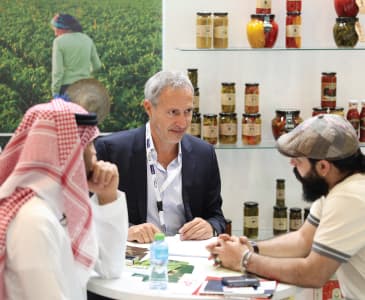
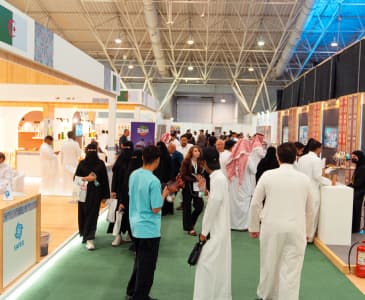
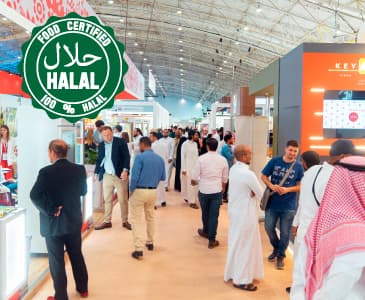
That is where Foodex Saudi 2026 takes place. The 14th edition runs from 23 to 25 November 2026 at the Jeddah Center for Exhibitions & Events, bringing together importers, distributors, retailers, HORECA operators and manufacturers from across the Kingdom, with Guaranteed Business Meetings connecting exhibitors to pre-qualified buyers.
Exhibitor bookings close on 20 October 2026. Bookings received after that date are subject to availability.
- Book your stand: www.foodexsaudiexpo.com/en/registeryourinterest
- Call or WhatsApp: +966 55 587 9635
- Email: info@sunaidiexpo.com
Sources
- Saudi Ports Authority (Mawani) — Jeddah Islamic Port expansion, July 2026 (as reported by Middle East Observer, 13 July 2026)
- USDA Foreign Agricultural Service — Saudi Arabia food and agricultural trade data, 2025
- Saudi Ministry of Industry & Mineral Resources — food industry investment target
- MODON — Jeddah Food Cluster (Arab News, 25 November 2024 and 28 April 2025)
- Saudi Vision 2030 / Ministry of Hajj & Umrah — Umrah visitor target (Gulf News)
Curated by the Foodex Saudi team from market coverage of the Saudi and GCC food & beverage sector.